Buisness
30 Nov 25
How to Write a Resume for Your First Job: The Ultimate Guide for 2024
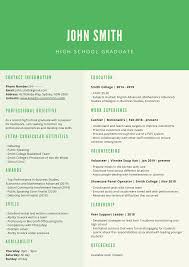
You’ve spent years in school, absorbed knowledge, and developed skills. Now, you’re ready to take the monumental step into the professional world. But there’s one significant hurdle standing between you and your dream career: writing a resume for your first job.
If you’ve ever stared at a blank document, wondering how to fill a page when you have no formal work experience, you’re not alone. This is the universal challenge for every first-time job seeker. The secret, however, is understanding that you have more to offer than you think. Your first resume isn't about listing a prolific career; it's about presenting your potential.
This definitive guide will walk you through, step-by-step, how to write a resume for first job applications that get noticed. We'll transform your academic achievements, extracurricular activities, and personal projects into a compelling narrative that hiring managers want to read.
The Mindset Shift: You Do Have Experience
Before we type a single word, let's reframe your thinking. The question isn't "What jobs have I had?" The question is, "What relevant skills, accomplishments, and attributes do I possess?"
Employers hiring for entry-level positions know you won’t have a 10-year career history. They are looking for potential, a strong work ethic, trainability, and foundational skills. Your mission is to demonstrate these qualities through your academic career and other life experiences. This is the core of creating a compelling first job resume.
Step 1: Master the Foundational Resume Format
Choosing the right structure is crucial. For a first-time job applicant, the reverse-chronological format is the standard and most expected. However, since you lack work history, we will lean heavily on a functional or combination approach within that framework.
Here’s the standard section order:
-
Contact Information
-
Resume Objective (This is your secret weapon)
-
Education
-
Skills
-
Experience & Projects (This is a flexible section)
-
Certifications & Awards (Optional, but valuable)
A. The Header & Contact Information: Keeping it Professional
This section seems simple, but errors here can disqualify you instantly.
-
Full Name: Use your formal name.
-
Phone Number: Double-check for accuracy.
-
Professional Email Address: Create a new one if necessary (e.g., firstname.lastname@gmail.com). Avoid unprofessional handles.
-
Location: City and State are sufficient.
-
LinkedIn Profile URL (Highly Recommended): Ensure your profile is complete and matches your resume. This is a non-negotiable in the modern job search.
-
Portfolio Link (If applicable): For roles in design, writing, or tech, a link to your online portfolio is essential.
Pro Tip: Your contact info is the first thing a recruiter sees. Make it clean, clear, and mistake-free.
Step 2: Crafting a Powerful Resume Objective
For a seasoned professional, a Resume Summary is standard. For you, the Resume Objective is your elevator pitch. In 2-3 sentences, you must articulate who you are, what you can do, and what you’re aiming for.
A weak objective is generic: "Seeking a challenging position where I can use my skills to help the company grow."
A powerful resume objective for a first job is specific, skill-focused, and tailored.
The Formula:
[Your Key Skill/Attribute] + [Your Field of Interest/Study] + [How You Can Add Value to the Specific Company]
Example 1 (For a Marketing Role):
-
Weak: "Looking for a job in marketing."
-
Strong: "Motivated Business Administration graduate with proven social media management and content creation skills, seeking to leverage analytical and creative abilities to support the digital marketing initiatives at [Company Name]. Grew a personal blog's readership by 200% in six months."
Example 2 (For a Data Analyst Role):
-
Weak: "Recent grad seeking an analyst position."
-
Strong: "Detail-oriented Mathematics graduate with advanced proficiency in Python, SQL, and data visualization. Eager to apply statistical analysis and problem-solving skills to interpret complex datasets and drive data-informed decisions at [Company Name]."
See the difference? The strong objectives tell a story and provide concrete evidence before the reader even gets to the experience section. This is a critical component of any winning first job resume.
Step 3: The Education Section: Your New "Experience" Section
When you have no formal work history, your Education section carries immense weight. Place it prominently above the "Experience" section.
What to Include:
-
University Name, City, State
-
Degree Type & Major/Minor (e.g., Bachelor of Science in Computer Science)
-
Graduation Date (or Expected Date)
-
GPA: The rule of thumb: Include it if it's 3.5 or higher. If not, you can omit it.
-
Relevant Coursework: This is a goldmine! List 4-6 courses directly related to the job you're applying for.
-
Academic Projects: Briefly describe a significant project, the skills you used, and the outcome.
Education Section Example:
University of California, Los Angeles | Los Angeles, CA
Bachelor of Arts in Communications | Expected May 2024
*GPA: 3.8/4.0*Relevant Coursework: Digital Media Strategies, Public Relations Writing, Consumer Behavior, Data Analytics for Media, Professional Communication.
Academic Project: "Brand Revitalization Campaign for a Local Business"
Conducted market research and SWOT analysis to identify growth opportunities.
Developed a full social media strategy, including a content calendar and sample posts, which received top marks in the class.
This transforms your education from a line item into a narrative of applied learning.
Step 4: The Skills Section: Showcasing Your Toolkit
This section is where you align your capabilities directly with the job description. It should be a mix of hard and soft skills.
-
Hard Skills: Teachable, measurable abilities. (e.g., Python, SEO, Adobe Photoshop, Financial Modeling, SQL, Google Analytics).
-
Soft Skills: Interpersonal traits. (e.g., Communication, Leadership, Problem-Solving, Time Management, Teamwork, Adaptability).
How to Identify Your Skills:
-
Analyze the Job Description: Circle every required and "nice-to-have" skill.
-
Audit Your Life: Think about your classes, projects, clubs, sports, volunteer work, and even hobbies. Did you lead a team? That's leadership. Did you manage a heavy course load? That's time management. Did you build a computer? That's technical aptitude.
Example of a Well-Balanced Skills Section:
Technical Skills: Microsoft Office Suite (Excel, PowerPoint, Word), Google Workspace, Basic HTML/CSS, Canva, Adobe Premiere Rush, SEO Fundamentals.
Interpersonal Skills: Verbal & Written Communication, Critical Thinking, Collaborative Teamwork, Public Speaking, Problem-Solving, Active Listening.
Step 5: The "Experience" Section: A Creative Rebranding
This is the section that causes the most anxiety. The key is to broaden your definition of "experience." It's not just paid jobs.
What Counts as "Experience" for a First Job Resume?
-
Internships: The most obvious and valuable.
-
Volunteer Work: Any unpaid work for a cause, school, or community.
-
Extracurricular Activities & Clubs: President of a club, treasurer of a society, event organizer.
-
Academic Projects: As mentioned, but you can elaborate on the most significant ones here.
-
Personal Projects: A coding portfolio, a successful blog, an Etsy store, a YouTube channel.
-
Freelance/Gig Work: Tutoring, dog walking, graphic design for a friend.
For each entry, don't just list your duties. Use the STAR Method (Situation, Task, Action, Result) to frame your accomplishments.
-
Situation: Briefly set the context.
-
Task: What was your goal or responsibility?
-
Action: What specific actions did you take? Use strong action verbs.
-
Result: What was the outcome? Quantify it whenever possible.
"Experience" Section Examples:
Volunteer Coordinator Assistant | Local Community Food Bank | Summer 2023
Situation: Assisted in organizing the annual "Summer Drive" fundraiser.
Task: Responsible for recruiting and managing day-of-event volunteers.
Action: Recruited a team of 15+ volunteers through social media and campus outreach. Created and distributed shift schedules and role descriptions.
Result: Contributed to a 20% increase in volunteer participation compared to the previous year, helping the food bank exceed its donation goal by $5,000.
Personal Project: Sustainable Fashion Blog
Situation: Launched a blog to explore and promote sustainable fashion brands.
Task: Aimed to build a consistent readership and establish a personal brand.
Action: Researched and wrote 2-3 SEO-optimized articles per week. Managed all social media promotion across Instagram and Pinterest.
Result: Grew the blog to over 1,000 monthly unique visitors and built an Instagram community of 2,500+ followers in six months.
Step 6: Final Touches and Polishing
1. Tailor, Tailor, Tailor: Never send the same generic resume to every job. Read the job description for each role and adjust your objective, skills, and project descriptions to include the keywords from the ad. This is the most critical resume writing tip for beginners.
2. Keep it to One Page: As a first-time job seeker, your resume must be concise and impactful. One page is the standard.
3. Choose a Clean, Modern Template: Avoid flashy graphics and hard-to-read fonts. Use a clean, professional template from Google Docs, Canva, or a service like Resume Genius. Ensure it is ATS-friendly (Applicant Tracking System) – meaning a simple layout that software can read easily.
4. Proofread Like Your Career Depends On It: Typos and grammatical errors signal a lack of attention to detail. Read it aloud, use spellcheck, and have a friend, family member, or career counselor review it.
5. Save and Send Correctly: Save your final version as a PDF (unless instructed otherwise) to preserve formatting. Use a logical file name: YourName_Resume.pdf or YourName_JobTitle_Resume.pdf.
Common Mistakes to Avoid on Your First Resume
-
Using a Vague Objective: We've already fixed this!
-
Listing Duties, Not Achievements: Focus on what you accomplished, not just what you were assigned.
-
Including Irrelevant Information: Your babysitting job at 14 or your passion for video games (unless applying in the gaming industry) likely doesn't belong.
-
Being Negative: Never speak poorly of a previous experience, even a difficult group project.
-
Lying or Embellishing: It’s not worth it. Be honest and focus on framing your genuine experiences in the best light.
Sample Resume for a First Job
Jane Doe
San Francisco, CA | (123) 456-7890 | jane.doe@email.com | linkedin.com/in/janedoe | janedoeportfolio.com
RESUME OBJECTIVE
Detail-oriented and motivated Graphic Design graduate with expertise in Adobe Creative Suite and a proven ability to develop engaging visual content. Seeking to apply my skills in branding, layout design, and digital illustration to support the creative team at Studio Alpha. Successfully designed and launched a brand identity for a mock client that was featured in a university exhibition.
EDUCATION
San Francisco State University | San Francisco, CA
Bachelor of Fine Arts in Graphic Design | Expected May 2024
GPA: 3.85
Relevant Coursework: Typography, Digital Imaging, Brand Identity Systems, Web Design, Motion Graphics, Design History.
Academic Project: "Re-Brand 'The Corner Cafe'"
-
Conducted user research to identify target audience and design preferences.
-
Created a complete brand package including a new logo, color palette, typography, and sample menu and packaging designs.
-
Presented the final pitch to a panel of local design professionals.
SKILLS
-
Software: Adobe Illustrator, Photoshop, InDesign, After Effects; Figma; Procreate.
-
Design: Typography, Brand Identity, Digital Illustration, Print Design, Layout & Composition.
-
Professional: Creative Problem-Solving, Client Communication, Time Management, Receiving & Implementing Feedback.
EXPERIENCE & PROJECTS
Freelance Design Assistant | Self-Employed | Jan 2023 – Present
-
Collaborated with two small business clients to create social media graphics and marketing materials.
-
Developed a series of 10+ Instagram story templates for a local bakery, increasing their user engagement by 15%.
-
Translated client vision into compelling visual designs under tight deadlines.
President, University Design Club | SFSU | Sept 2022 – May 2023
-
Led a team of 5 board members to organize weekly meetings and workshops for 50+ members.
-
Secured funding from the student government to host a guest speaker series with industry professionals.
AWARDS & CERTIFICATIONS
-
Dean's List, Fall 2021 – Spring 2023
-
Adobe Certified Professional in Graphic Design & Illustration Using Adobe Illustrator
Conclusion: Your Journey Starts Now
Learning how to write a resume for first job is your first major project in the professional world. It requires introspection, strategy, and a willingness to see the value in all your experiences. You are not a blank slate. You are a candidate with potential, skills, and a story to tell.
By following this guide, you can move past the anxiety of the blank page and create a powerful, persuasive document. You will no longer be a candidate without experience; you will be a candidate with demonstrated initiative, relevant skills, and immense potential. Now, go and build that effective first-time job resume and land the opportunity you deserve.