Health
08 Dec 25
Dr. Rachel Levine: A Trailblazer in Medicine, Public Health, and History
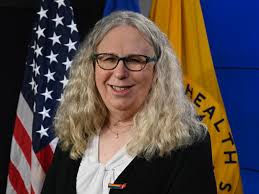
Dr. Rachel Levine stands as a monumental figure in American public health, a pioneering leader whose career has broken barriers and shaped national policy. As the first openly transgender person to be confirmed by the U.S. Senate and the first to hold a four-star officer rank in any of the nation's uniformed services, Dr. Rachel Levine’s journey from clinician to admiral represents a profound intersection of medical expertise, public service, and historic social progress.
Her work, spanning decades from hospital wards to the highest levels of federal government, underscores a relentless commitment to health equity and science-based policy, even as she navigated unprecedented political and personal challenges.
From Academic Medicine to Public Health Leadership
Dr. Rachel Levine’s path to national prominence was built on a solid foundation of elite medical training and academic dedication. A graduate of Harvard College and Tulane University School of Medicine, she completed her residency and a fellowship in adolescent medicine at New York City's Mount Sinai Hospital. Her early clinical focus was on adolescent medicine and eating disorders, leading her to central Pennsylvania in 1993, where she joined the Penn State College of Medicine.
At Penn State Hershey Medical Center, Dr. Rachel Levine demonstrated early leadership by founding the Division of Adolescent Medicine and the Eating Disorders Program. Her clinical work soon expanded into advocacy, particularly for LGBTQ inclusivity. In the early 2010s, she collaborated with the hospital administration to craft the “Levine Policy,” which expanded non-discrimination protections to include gender identity and expression—a significant institutional change that reflected her growing commitment to systemic reform.
Her transition into public service began in earnest when Pennsylvania Governor Tom Wolf appointed her as the state's Physician General in 2015, followed by her role as Secretary of the Pennsylvania Department of Health in 2017. In these roles, Dr. Rachel Levine confronted the devastating opioid crisis head-on, issuing a landmark order that allowed law enforcement to carry and the public to access the overdose-reversal drug naloxone without a prescription, a move credited with saving countless lives.
Table: Career Timeline of Dr. Rachel Levine
| Year | Position | Key Achievement |
|---|---|---|
| 1993 | Joins Penn State College of Medicine | Founds Division of Adolescent Medicine and Eating Disorders Program. |
| 2015 | Pennsylvania Physician General | Unanimously confirmed; initiates expanded naloxone access. |
| 2017 | PA Secretary of Health | Leads state's public health response, including to COVID-19. |
| 2021 | U.S. Assistant Secretary for Health | First openly transgender official confirmed by the U.S. Senate. |
| 2021 | Four-Star Admiral, USPHS Commissioned Corps | First openly transgender four-star officer in U.S. uniformed services. |
A Historic Federal Tenure: Breaking Barriers at the National Level
In 2021, Dr. Rachel Levine ascended to the national stage when President Joe Biden nominated her for the role of Assistant Secretary for Health at the U.S. Department of Health and Human Services (HHS). Her confirmation by a bipartisan Senate vote made her the highest-ranking openly transgender official in U.S. history. Months later, she was commissioned as a four-star admiral in the U.S. Public Health Service Commissioned Corps, breaking another barrier as the service's first female four-star admiral.
In this role, Dr. Rachel Levine oversaw a broad portfolio. She coordinated federal efforts on issues from the COVID-19 pandemic and the opioid crisis to HIV/AIDS and climate change. A consistent theme of her leadership was the focus on health equity—the principle that everyone should have a fair opportunity to attain their full health potential. She argued forcefully that addressing disparities based on race, gender, or socioeconomic status is not a political stance but a fundamental necessity for public health.
However, her federal tenure coincided with a dramatic increase in state-level legislation targeting transgender rights, particularly youth access to gender-affirming care. Dr. Rachel Levine became a prominent defender of such care, calling it “essential healthcare” that is “life-saving” and based on decades of medical evidence and standards. She characterized the political movement against it as “ideologically motivated,” arguing it was detached from scientific and medical consensus.
Navigating Controversy and Advocacy
Dr. Rachel Levine’s career, while celebrated for its milestones, has not been without significant controversy and scrutiny, often highlighting the complex intersection of public health, politics, and identity.
-
Pennsylvania’s COVID-19 Response: As Pennsylvania's health secretary, Levine faced intense criticism over a March 2020 order directing nursing homes to admit stable patients, including those who had been treated for COVID-19. Critics argued this policy contributed to outbreaks in vulnerable facilities. This criticism was amplified when it was reported that Levine had moved her own mother out of a personal care home during the pandemic. Levine defended the decision as a personal family matter and noted that the order was intended to prevent hospital overcrowding. Subsequent investigations and statements from nursing home trade groups found no evidence that facilities were forced to accept COVID-positive patients against their will, and the U.S. Department of Justice ultimately declined to open an investigation into the policy.
-
The Debate over Gender-Affirming Care: Dr. Rachel Levine has been a central figure in the national debate on transgender medicine. She has consistently advocated for gender-affirming care models, aligning with standards from the World Professional Association for Transgender Health (WPATH). However, this position has attracted criticism from those who advocate for more caution. A 2024 report from The Economist, cited by the Society for Evidence-Based Gender Medicine (SEGM), alleged that WPATH had manipulated research processes and that Levine had successfully pressured the organization to remove recommended minimum ages for surgical interventions from its guidelines. Levine’s office did not publicly comment on these specific allegations, but she has consistently maintained that care should be individualized, evidence-based, and focused on the well-being of the patient.
-
Post-Service Recognition: After her term ended in early 2025, a new controversy emerged. NPR reported that her official portrait at HHS headquarters had been altered by the subsequent administration to include a name she used prior to her transition. A spokesperson for Levine called the act “bigotry,” while an HHS spokesperson stated the change was part of ensuring information reflects “biological reality”. This incident was seen by many as a symbolic act of erasure, highlighting the persistent challenges transgender individuals face even after achieving the highest levels of success.
Table: Key Advocacy Positions and Associated Controversies
| Policy Area | Dr. Levine's Stated Position | Nature of Controversy |
|---|---|---|
| Nursing Home Policy during COVID-19 | Order aimed to prevent hospital overcrowding; personal family decisions are private. | Criticized for potentially exposing vulnerable populations; questioned for personal actions. |
| Gender-Affirming Care for Youth | Evidence-based, essential, life-saving healthcare that should be decided by patients, families, and doctors. | Caught in a heated political debate; allegations of influencing medical guidelines without sufficient evidence. |
| Health Equity | A fundamental, non-negotiable goal of public health, not a "woke" concept. | Framed by opponents as divisive identity politics rather than a medical objective. |
A Lasting Legacy and the Path Forward
Despite the controversies, the legacy of Dr. Rachel Levine is multifaceted and indelible. On a structural level, she irreversibly changed the face of American leadership. She proved that an openly transgender person could not only serve at the highest echelons of government but also command respect and achieve confirmation with bipartisan support. Her four-star commission in the Public Health Service opened doors in the uniformed services that were previously sealed.
Professionally, her legacy is one of pragmatic public health advocacy. From the front lines of the opioid crisis to the command center of a pandemic, she emphasized preparedness, science, and compassion. In her post-government reflections, she has continued to champion these ideals. In a 2025 speech at the University of Michigan, she argued forcefully that “we haven't made progress unless we’ve all made progress,” encapsulating her core belief in inclusivity as the bedrock of a healthy society.
For the LGBTQ+ community, and transgender Americans in particular, Dr. Rachel Levine remains a potent symbol of visibility and resilience. She navigated a period of escalating political attacks with a focus on her work, stating simply, “I’m a resilient person and I’m fine”. Her journey from a professional keeping a “secret” in the 1970s to a celebrated admiral in the 2020s provides a powerful narrative of authenticity and perseverance.
Today, Dr. Rachel Levine continues her work in medicine and education. According to a Johns Hopkins profile, she is a practicing internist and professor, focusing on medical education and faculty development—returning to the academic roots where her career began. Patient reviews consistently praise her as a “thoughtful,” “caring,” and “outstanding” physician, a testament to the clinical skill that has underpinned her entire public career.
The story of Dr. Rachel Levine is still being written. It is a story that transcends any single policy or political moment. It is the story of a physician who dedicated her life to healing, a leader who expanded the nation's conception of who can lead, and an individual whose personal courage became intertwined with the public good. Her career demonstrates that expertise and identity are not separate, but can together forge a more equitable and healthy future for all.