Apple’s Tim Cook Takes on Crucial New Role: Global Ambassador
Technology
22 Apr 26
Apple’s Tim Cook Takes on Crucial New Role: Global Ambassador
Introduction
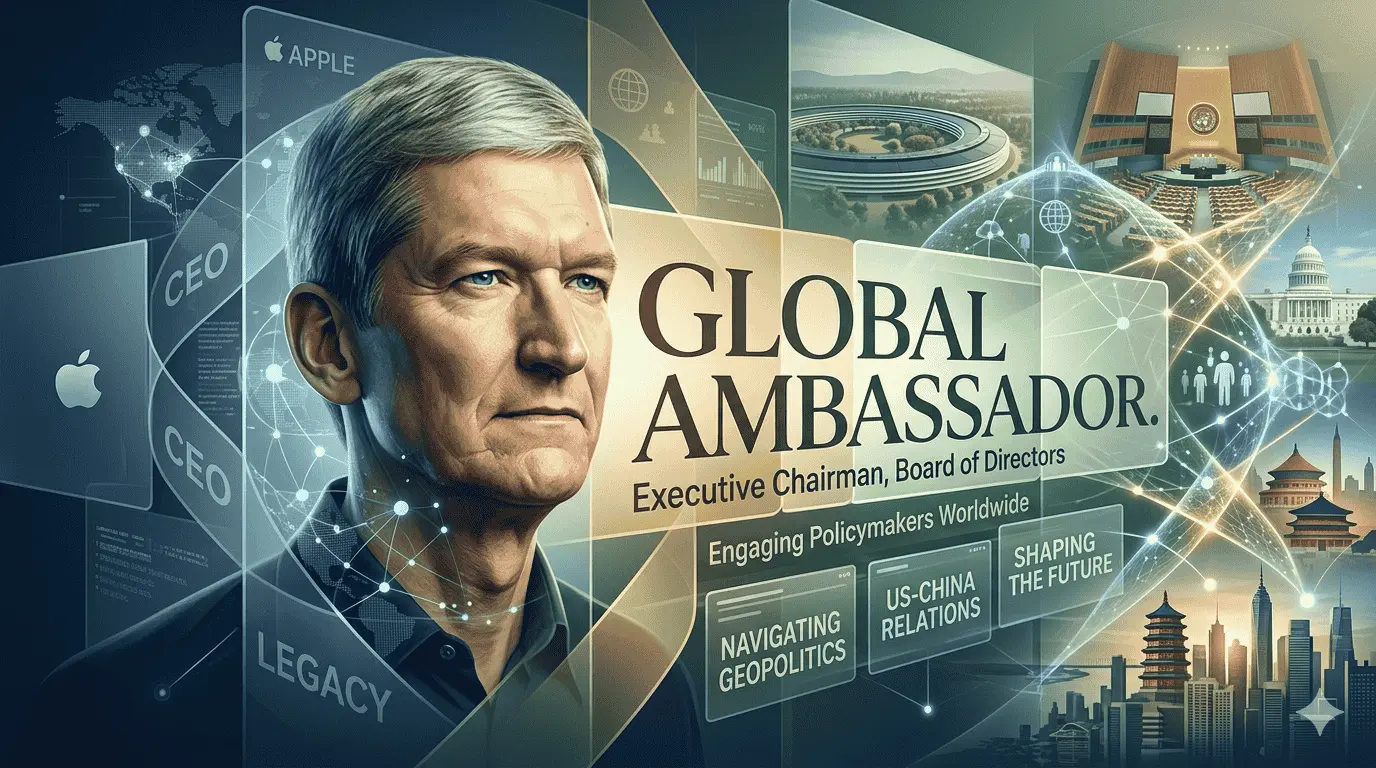
In a significant development reflecting the growing influence of technology leaders in global affairs, Apple CEO Tim Cook has taken on a crucial new role as a global ambassador. This shift goes beyond corporate leadership, positioning Cook at the center of international diplomacy, economic strategy, and technological collaboration.
As Apple continues to expand globally, this new responsibility highlights how tech giants are increasingly shaping global policy, trade, and innovation.
Who is Tim Cook?
Tim Cook, the CEO of Apple since 2011, has successfully led the company into becoming one of the most valuable brands in the world. Known for his strategic leadership and focus on sustainability, privacy, and innovation, Cook has strengthened Apple’s global footprint while maintaining its premium identity.
What Does the Global Ambassador Role Involve?
As a global ambassador, Tim Cook is expected to:
- Build international partnerships
- Represent Apple in global policy discussions
- Promote sustainability and innovation
- Strengthen relationships with governments and industry leaders
- Navigate geopolitical challenges affecting the tech industry
This role places Cook at the intersection of business, politics, and global development.
New Test in India
A fresh and critical test of Tim Cook’s diplomatic abilities is emerging in India — a market with massive potential but significant complexity for Apple.
India’s rapidly growing tech ecosystem is still far from the scale of China’s manufacturing dominance, often referred to as “iPhone City.” While the opportunity is enormous, the infrastructure and production capacity are still developing.
Geopolitical tensions also add complexity. Relations between New Delhi and Beijing remain strained, similar in some ways to US-China friction. Only a few years ago, military clashes in the Himalayas highlighted the fragile relationship between the two nations.
At the same time, India is aggressively positioning itself as a global manufacturing hub — even aiming to compete directly with China. This presents both an opportunity and a challenge for Apple.
Unlike China, where Apple has long-established partnerships, Cook has comparatively limited experience and fewer deep-rooted connections with India’s industrial giants like Tata Group and Reliance Industries. These companies operate within a unique ecosystem often dominated by powerful business families.
Despite these challenges, Apple has made bold moves. The company increased iPhone production in India by approximately 53% last year, and now around a quarter of its flagship devices are produced there. This shift is part of Apple’s strategy to reduce dependence on China and avoid tariffs.
According to Aruna Sundararajan, a former senior official in India’s technology and telecom sector, Cook’s decision to invest in local manufacturing was a bold move at a time when few global companies were willing to take that risk. She described Apple’s expansion in India as something that “will go down in history.”
Managing Global Supply Chains in the AI Era
As part of his ambassadorial role, Cook must also reassure Apple’s vast network of global suppliers that the company remains their best long-term partner — especially in the age of artificial intelligence.
Apple’s supply chain includes major global players such as:
- Taiwan Semiconductor Manufacturing Company (TSMC)
- Foxconn
- Samsung Electronics
- SK Hynix
However, the competitive landscape is shifting. Companies like Nvidia are becoming dominant players in the AI space, attracting greater attention and revenue from suppliers. Even long-time partners like Foxconn are seeing faster growth in server-related business than in mobile devices.
This evolving dynamic means Cook must actively maintain Apple’s influence and ensure continued loyalty across its supply chain.
Watchful Eye on US Politics
While managing international expansion, Tim Cook must also maintain strong political relationships in the United States — particularly with former President Donald Trump.
Their relationship has played a significant role in protecting Apple from heavy tariffs on Chinese imports. Trump has previously praised Cook, even referring to him humorously as “Tim Apple,” while acknowledging his direct communication style.
Cook’s diplomatic engagement helped Apple avoid billions of dollars in tariffs, demonstrating the importance of political relationships in global business strategy.
Despite their generally positive relationship, disagreements have occurred — especially on issues like immigration. Cook has openly supported protections for undocumented youth and has, at times, pushed for more measured government actions.
In recent years, other tech leaders have followed Cook’s example by engaging directly with political leadership. CEOs from major companies are now playing a more active role in shaping policy, particularly around artificial intelligence and economic growth.
Impact on Apple’s Global Strategy
Tim Cook’s expanded role strengthens Apple’s position in several key ways:
1. Global Market Expansion
Stronger diplomatic ties can open doors in emerging markets like India and Southeast Asia.
2. Policy Influence
Cook’s involvement in global discussions allows Apple to influence regulations around technology, privacy, and trade.
3. Supply Chain Stability
Maintaining relationships with key partners ensures Apple remains competitive in a rapidly evolving tech landscape.
Focus on Sustainability and Innovation
Cook has consistently emphasized environmental responsibility. Under his leadership, Apple has made major strides toward carbon neutrality.
As a global ambassador, he is expected to:
- Promote clean energy initiatives
- Encourage sustainable manufacturing
- Lead global conversations on climate responsibility
Challenges Ahead
This role is not without challenges:
- Navigating geopolitical tensions
- Competing in the AI-driven tech landscape
- Balancing diplomacy with corporate interests
- Managing evolving supplier relationships
However, Cook’s experience and calm leadership style position him well to handle these complexities.
Future Outlook
Tim Cook’s role as a global ambassador signals a broader shift in how tech leaders operate. CEOs are no longer confined to corporate boardrooms — they are now key players in global diplomacy and policy.
Cook himself has indicated that he plans to continue building on Apple’s long-standing relationships worldwide and contribute even more actively to global discussions.
Conclusion
Apple’s Tim Cook taking on the crucial new role of global ambassador marks a turning point in the relationship between technology and global leadership. From navigating complex markets like India to maintaining political ties in the US and managing global supply chains, Cook’s responsibilities now extend far beyond Apple.
This evolution reflects a new era where technology leaders shape not only industries but also the global future.
By [Shah Zaib Khalid]